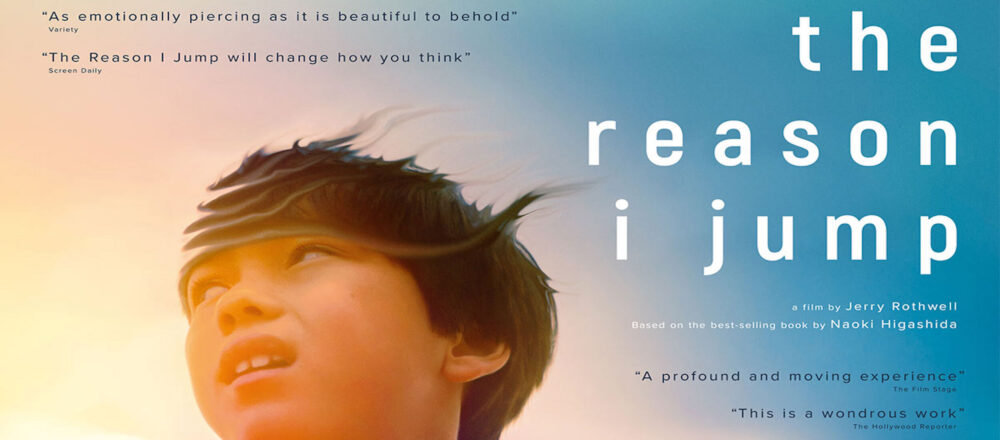
The Reason I Jump
2022 EMMY AWARDS: WINNER Best Original Score For A Documentary
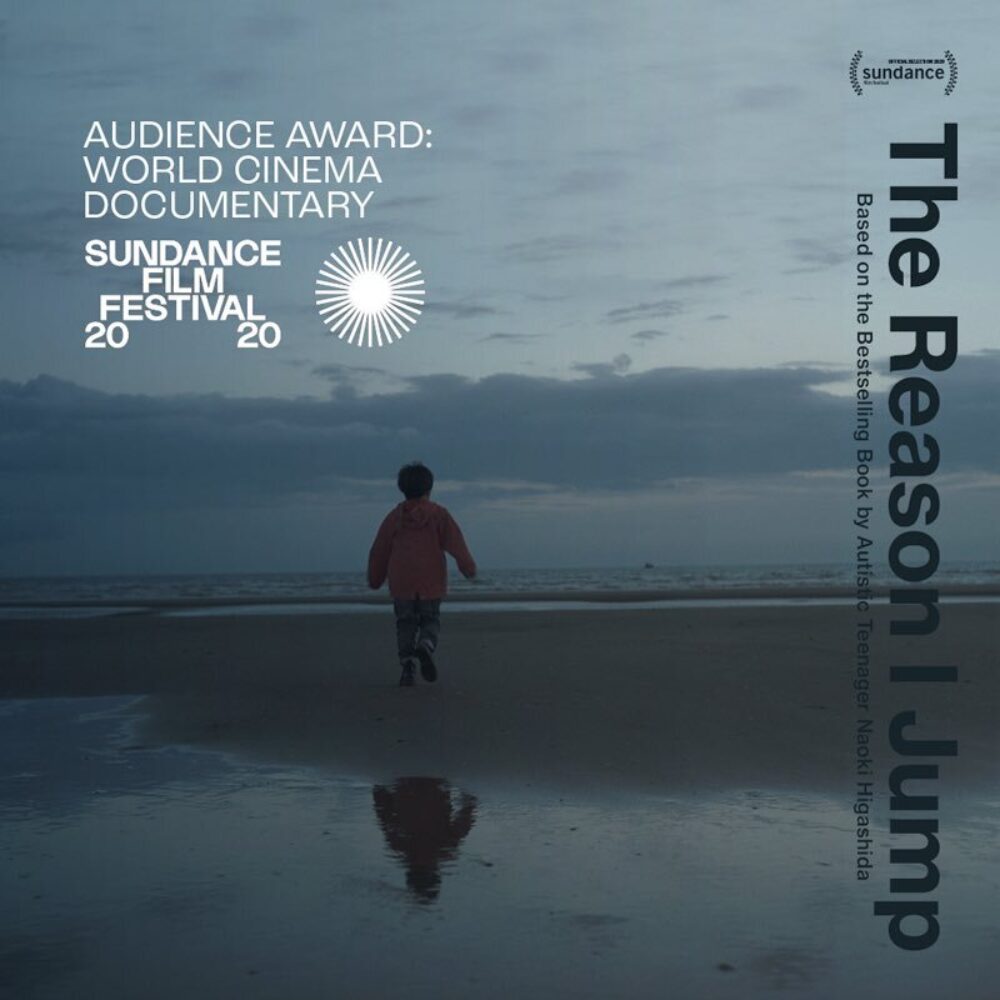
2020 SUNDANCE FF: WINNER Audience Award
Based on the best-selling book by Naoki Higashida, THE REASON I JUMP is a Sundance winning feature ; an immersive cinematic exploration of neurodiversity through the experiences of nonspeaking autistic people from around the world. The film blends Higashida's revelatory insights into autism, written when he was just 13, with intimate portraits of five remarkable young people. It opens a window for audiences into an intense and overwhelming, but often joyful, sensory universe.
Moments in the lives of each of the characters are linked by the journey of a young Japanese boy through an epic landscape; narrated passages from Naoki’s writing reflect on what his autism means to him and others, how his perception of the world differs, and why he acts in the way he does: the reason he jumps.
The film distils these elements into a sensually rich tapestry that leads us to Naoki’s core message: not being able to speak does not mean there is nothing to say.
FESTIVALS INCLUDING: Sundance, BFI London Film Festival, One World, HotDocs, Toronto, Athens, Hot Springs, Chicago, Denver, Doc NYC, Hamptons
Directed By: Jerry Rothwell; Prod: Al Morrow, Jeremy Dear, Stevie Lee
MUSIC AWARDS
2022 EMMY AWARDS
WINNER Best Original Score For A Documentary
2020 BIFA FILM AWARDS
NOMINEE Best Music
2020 CINEMA EYE HONORS
NOMINEE Outstanding Achievement in Music
Film Awards
Sundance Film Festival 2020 [World Premiere]
Audience Award Winner
Vancouver International Film Festival 2020
Impact Award Winner | Audience Award Winner
Festival Atmsphères 2020
Public Award Winner
Rome International Film Festival 2020
Winner Sorriso Diverso Award (Best Foreign Film)
Seminici Valladolid: TIEMPO DE HISTORIA
Segundo Premio Winner
IDA International Documentary Awards
Best Feature: Nominee
Best Director: Nominee
THE MAKING OF THE SCORE
Like the book upon which the film is based, the score opens a door to a constellation of divergent ways of experiencing reality.The aim was to evoke the intense sensory worlds of the book using score and sound design.
Composer Nainita Desai started work during the shoot and wrote a lot of material based on the key ideas in the book without seeing the film, a very liberating process. She brought in musicians throughout the year of production, holding semi-improvised recording sessions which would then help the music writing process.
We wanted to blur the lines between music and sound design to create a cinematic immersive aural experience mixed in Atmos 360. The final sound palette consists of manipulated found sound taken from the film’s location sound, non-verbal vocals, strings and other organic and treated elements such as the ‘Halo’ (a hand pan), prepared clarinet and saxophone. All the sounds are created from organic sources – treating and manipulating sounds working in tandem with the sound designer.
I also wanted authenticity towards Autism and Neurodiversity. Elisabeth Wiklander, cellist with the LPO is autistic and a cultural ambassador for the Natonal Autistic Society and her contribution has great sensitivity and perception particularly in the Forest sequence.
So for example in the scene where artist Amrit rocks to the movement of ceiling and table fans, the sounds of the fans and other percussive found sound elements from the location create a rhythmic foundation out of which grew a musical piece. Where the book describes the calm created by repetitive movement, Nainita created oscillations and repetition in the score to evoke the sense of cathartic release. Elsewhere, treated vocals represent the non-verbal world of the characters. she worked with treated vocals (using original Japanese words from the book) to represent the internal world of the characters. For example, Naoki’s phrase ‘we are outside the flow of time’ is broken up into its vowels and consonants, sung in a fractured way as the boy journeys through a remote landscape.
We wanted to have a distinction between the musical worlds of the different characters, using different instrumentation. Jestina’s sound is the playful Halo Handpan, the cello worked for Joss and Ben and Emma share the double bass and guitar between them.
The challenge was to create an aural landscape that felt cohesive and worked harmoniously – this process resulted in a very experimental journey, sometimes constructing sparse musical cues from the music stems in the original compositions.
Asked which elements she is most proud of, Nainita says: “The opening lighthouse with its interweaving oscillations and strings is a personal favourite, and the end cue has Japanese flavoured vocals with a cyclical quality, that brings us back full circle to the beginning of the film.”
MIXED BY NAINITA DESAI , STEVE PARR
VIOLIN: DANIEL PIORO, SARAH HARRISON
CELLO: ELISABETH WIKLANDER, MARION LONG, MATT HAWKEN
DOUBLE BASS; MALCOLM LAWS
VOCALS: NAINITA DESAI
TENOR SAXOPHONE: BEN VINCE
CLARINET: HEATHER ROCHE
GUITAR: ARTHUR DICK
ADDITIONAL PROGRAMMING: AKMAREL ZYKAYEVA
PRESS INTERVIEWS
MUSIC REVIEWS
INDIEWIRE: “Nainita Desai’s score builds little symphonies out of ambient noise”
THE BOSTON GLOBE: "The editing is fluid and dreamlike; and the soundtrack of rhythmic noises and atonal music both soothes and startles."
REEL NEWS DAILY: "Quick cuts, predominantly in close-up combined with a gorgeous soundtrack put you in an alternate headspace... a viscerally stunning documentary"
THE SPOOL: "Nainita Desai’s score does impeccable work reflecting the complex interior worlds of the on-screen subjects...Desai’s score can shift between various tones with ease. As a result, the score is just as versatile as people like Amrit or Ben.The editing and score reinforce The Reason I Jump’s central theme about the versatility of the autistic community."
FILM REVIEWS
“The Reason I Jump will change how you think, and how many films can say that?”
— Screen Daily
“A work of cinematic alchemy.”
— The Hollywood Reporter
“As emotionally piercing as it is beautiful to behold.”
— Variety