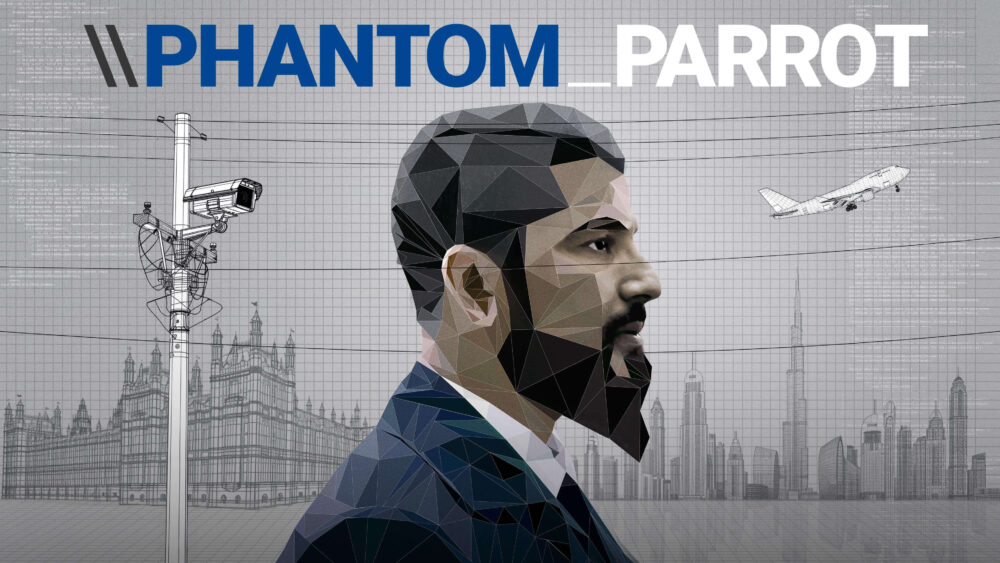
Phantom Parrot - BFI
BFI / Doc Society Film
When human rights activist, Muhammad Rabbani, refuses to grant UK border police access to his electronic devices, he finds himself arrested and prosecuted under British counterterrorism laws enacted two decades earlier. Tracing Rabbani’s journey from his fateful airport interrogation to the legal battle that ensues, the film exposes a clandestine British government surveillance program designed to harvest personal data from individuals at airports and border crossings. As the story unfolds, the film reveals a dark and complex narrative of technology, surveillance, and structural racism, where the balance of power hinges on control over data.
Director Kate Stonehill delivers a razor-sharp analysis, raising unsettling questions about the rule of law, modern espionage, and digital privacy in a world where the lines between security and oppression blur.
Directed By: Kate Stonehill
Produced By: Steven Lake
Available To Rent: BFI Player - Phantom Parrot
THE MAKING OF THE SCORE
Writing music for the tech scenes was challenging - trying to get across the terror of having your privacy broken into. without going down the cliched route of using electronics.
I used extended string techniques to bring an edgy, cold, alienating feel to the score and create a unique sounds soundscape to represent the tone of the film.
PHANTOM PARROT’s score is an integral part of both the structure and tone of the film. Since PHANTOM PARROT moves between different modes of storytelling (reconstruction, observational scenes), as well as storylines, the score involved creating a palette that would allow us to transition between locations. Nainita’s success in creating ‘themes’ for each distinct place was crucial for allowing the different elements to flow together seamlessly.
From a tone perspective, we wanted the PHANTOM PARROT score to bring to life the unsettling nature of the themes explored in the film, while avoiding ‘tech cliches’. There are moments where the score is absolutely crucial in communicating the human consequences of surveillance. In particular, the long, graphic sequences of data being extracted from a phone. We asked Nainita to compose sketches, which we then built the graphic sequences around. Nainita’s inventive decision to use big, powerful strings in these sequences adds something human and terrifying to these moments
FILM REVIEWS
“Sheds light on the Orwellian technologies being used across borders to
repress activists, journalists, and others”
- The Nation